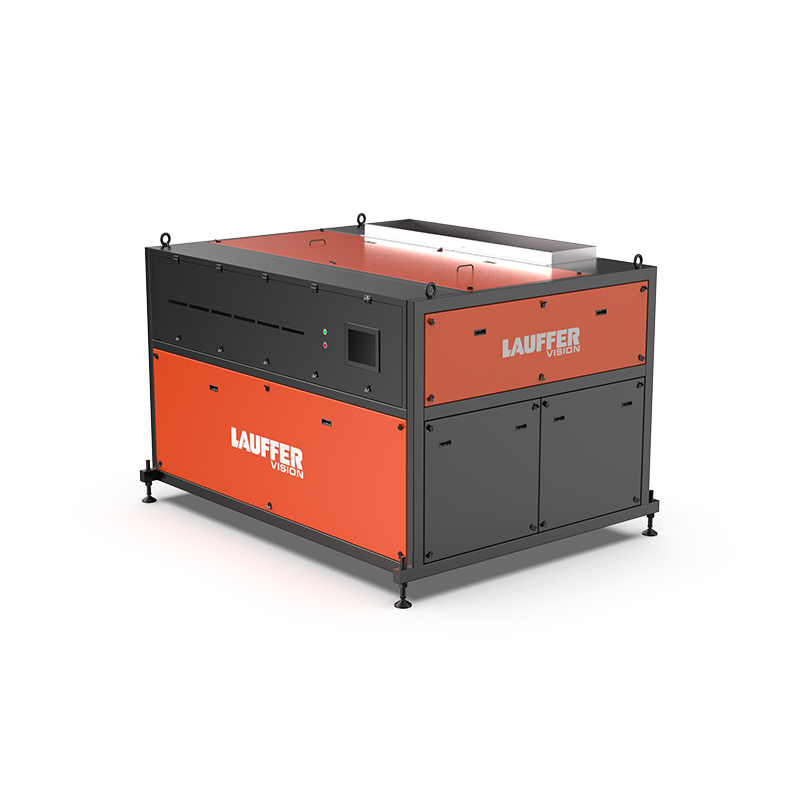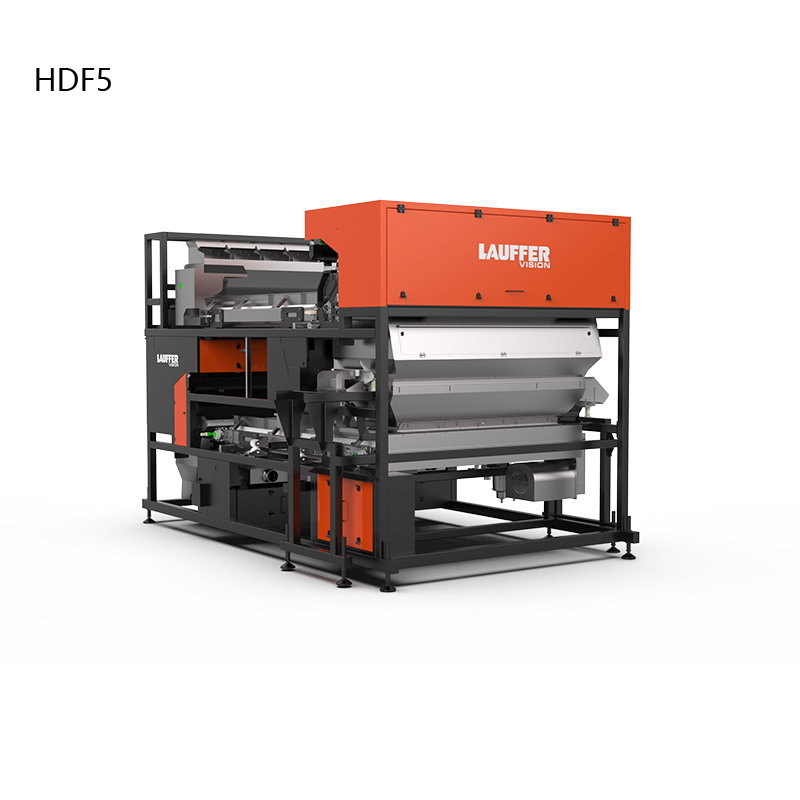
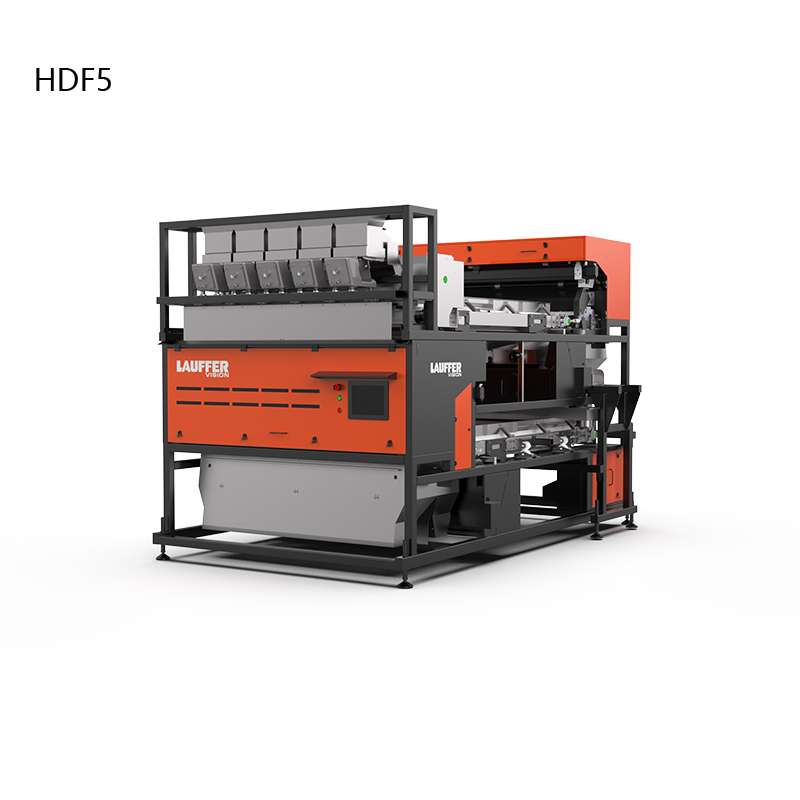
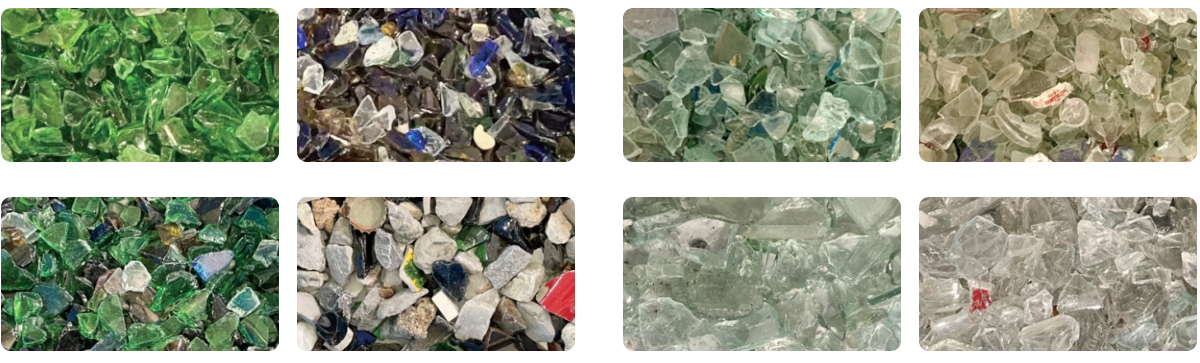
Glass cullet recycling inherently presents a sorting challenge, and the situation becomes even more difficult when the material is damp: moisture on glass surfaces causes unpredictable light refraction, obscures color characteristics, and causes contaminants to adhere, making reliable identification far more challenging than in dry conditions. Mixed container glass, MRF glass, or flat glass cullet contains a variety of glass hues, opaque impurities, ceramics, stones, and heat-resistant glass, and consistent classification of these materials becomes even more difficult under damp conditions. For recyclers that need to process dry, damp, and mixed glass cullet, the ability to maintain high-precision sorting performance regardless of moisture content is the key to producing high-purity, furnace-ready cullet.
The Grün HDF-G Series is an intelligent vision-based sorting system tailored for this exact scenario. It employs high-resolution RGB (HR-RGB) VIS imaging and proprietary AI deep learning algorithms to perform real-time scanning and surface feature analysis of dry container glass, MRF glass, or flat glass cullet with a particle size of 4–70 mm. Combined with high-performance air ejectors, the system efficiently sorts specific glass types from waste streams within milliseconds, whether the material is dry, damp, or mixed glass cullet.
Empowered by AI-driven surface feature recognition, the system continuously learns from real production data, steadily improving its detection accuracy. This means the equipment's performance is not static after deployment; instead, it continuously adapts and improves as production data accumulates, delivering stable and reliable sorting performance. This enables recyclers significantly improve cullet purity, remove impurities, consistently deliver recycled glass that meets the strict quality specifications of glass manufacturers, and command a premium in the market.
Technical Features
● High-Resolution RGB (HR-RGB) VIS Imaging
Clearly presents surface features of the material, providing reliable image input for AI algorithms. Efficiently identifies glass colors (clear, amber, green, etc.) and a wide range of contaminants (ceramics, stones, porcelain, metals, and plastics).
● Innovative Dual-Belt Sorting Structure
Improves yield and product recovery while reducing high-value fraction loss.
✩ High-sensitivity sorting is performed on the upper level to establish extremely high purity of the main material stream;
✩ Secondary re-inspection of upper-level rejects is conducted on the lower level, ensuring effective recovery of high-value fractions mixed within.
● Proprietary AI Deep Learning Algorithms
Enhances surface feature recognition and supports model retraining with real-world production data, continuously improving the detection accuracy through deep learning.
● Wear-Resistant Belt Design
Deploys a highly wear-resistant conveyor belt custom-built for glass cullet sorting, stably accommodating dry, damp, and mixed feeding conditions while its specially treated surface ensures abrasion and tear resistance under long-term friction and impact.
● High-Intensity LED Illumination
Maintains a constant imaging environment with clear, stable images unaffected by ambient light variations, ensuring consistent detection results across different periods and batches.
● In-House High-Performance Air Ejector
Delivers high-precision material rejection and ensures long-term stable operation even under high-throughput sorting conditions.
● Multi-Specification Model Portfolio
Offers two models with belt widths of 600 mm and 1200 mm, meeting diverse throughput requirements.
Typical Application Scenarios
✦ Glass Recycling Plants
✦ Bottle-to-Bottle Recyclers
✦ Solar Glass Producers
Specifications
Belt Width
(mm)
Air Pressure
(MPa)
Air Consumption
(m3/min)
Voltage
Power
(kW)
Dimension
(mm)
Unpacked Weight
(kg)
Grün HDF-G5
Specifications are approximate and subject to change without notice. Lauffer Vision reserves all rights for modifications.
Model
Air Nozzle
1500
640
0.6~0.8
>1.2
380V~50/60Hz
16
3723×2644×2387
2800