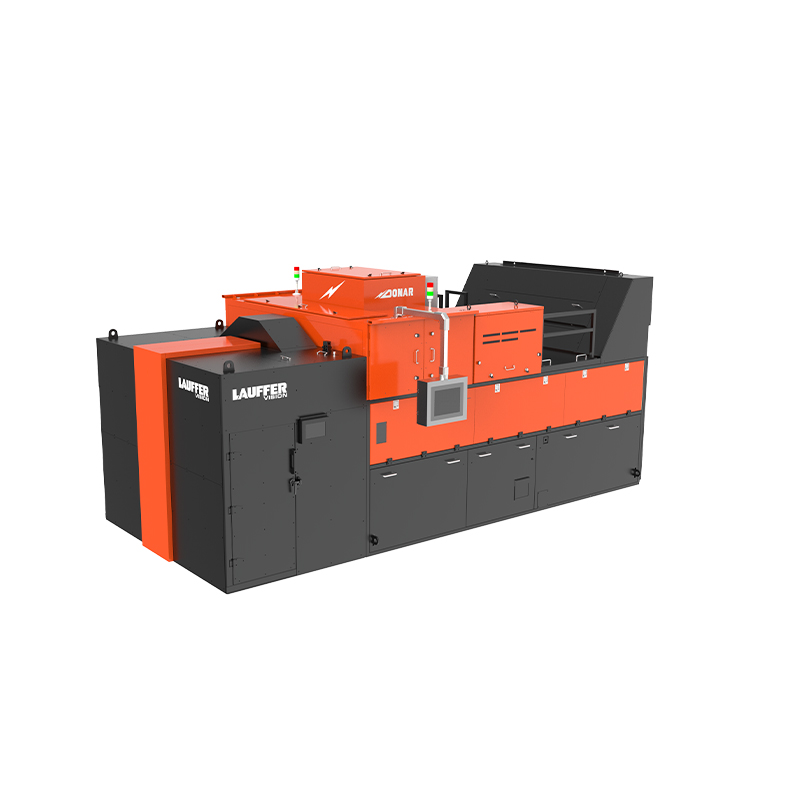
E-scrap presents a sorting challenge defined by extreme material complexity — electronic waste streams contain a dense mixture of high-value engineering plastics, copper, and aluminum, all commingled in unpredictable combinations and varying particle sizes, shapes and surface conditions. For e-scrap recycling operations, the ability to accurately identify and separate these valuable fractions is not just a matter of commercial value — it is the foundation of profitable, scalable recycling. Intelligent vision-based sorting is the key to transforming complex e-scrap into clean, high-purity material streams — efficiently, reliably, and at scale.
The Grün HDF-R Series is an intelligent vision-based sorting system tailored for e-scrap recycling. Leveraging high-resolution RGB (HR-RGB) imaging technology powered by proprietary AI algorithms, the system accurately identifies and separates high-value plastics, copper, and aluminum fractions by color variations, surface feature and visual contrast — maximizing recovery value and material purity in a single pass.
AI-driven surface feature recognition algorithms — trained on real-world production data using deep learning, with sorting precision refined continuously — ensure consistently high sorting accuracy across diverse e-scrap compositions and contamination profiles — helping processors maximize material recovery, achieve clean separation of plastics, copper and aluminum, and deliver high-purity recycled output that meets the demanding specifications of downstream reprocessing with unmatched confidence.
Technical Features
● High-Precision Multi-Feature Visual Detection
Market-leading HR-RGB imaging technology delivers high-precision detection of plastics, copper, and aluminum fractions in e-scrap shreds by analyzing color and surface feature variations — enabling accurate visual identification across the complex and unpredictable compositions typical of electronic waste streams.
● Deep Learning Algorithms Trained on Production Data
AI-driven defect recognition algorithms, trained on real-world production data via deep learning, replicate and exceed manual picking accuracy — and continuously improve through iterative model retraining, maintaining consistently high sorting performance as e-scrap compositions and contamination profiles evolve.
● Uniform Illumination for Consistent Detection
High-intensity, uniform LED illumination enhances the visibility of surface characteristics and material features across e-scrap shreds, providing the consistent lighting conditions required for reliable detection — minimizing false rejects and maximizing recovery of valuable fractions.
● Reliable High-Performance Air Ejector System
Powerful high-speed air ejectors, designed and manufactured in-house, deliver precise and consistent rejection of identified materials, ensuring accurate separation performance and reliable operation even at high-capacity throughput.
● Flexible Options for Different Throughput Requirements
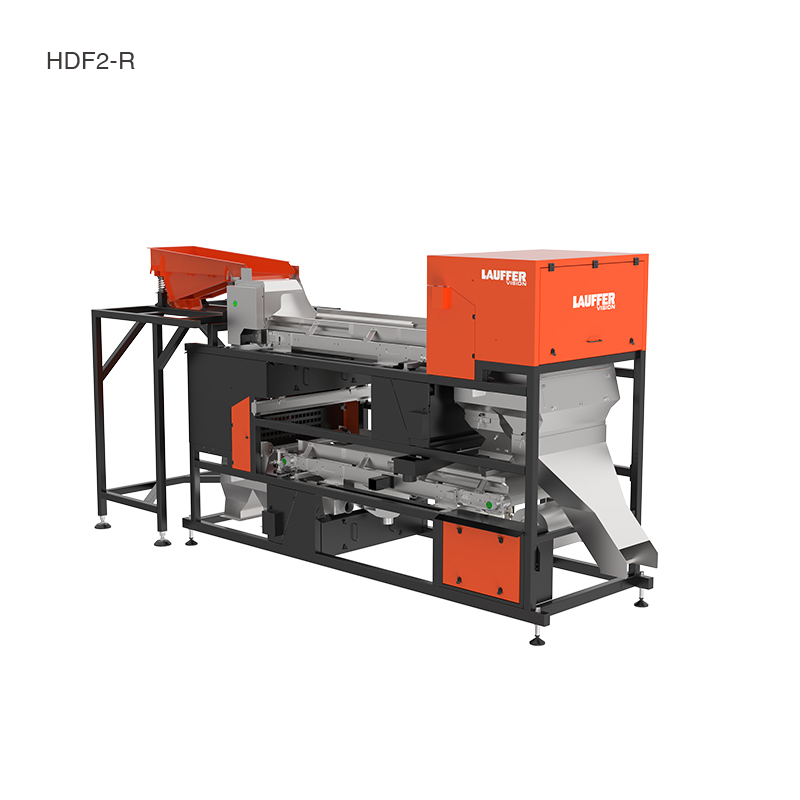
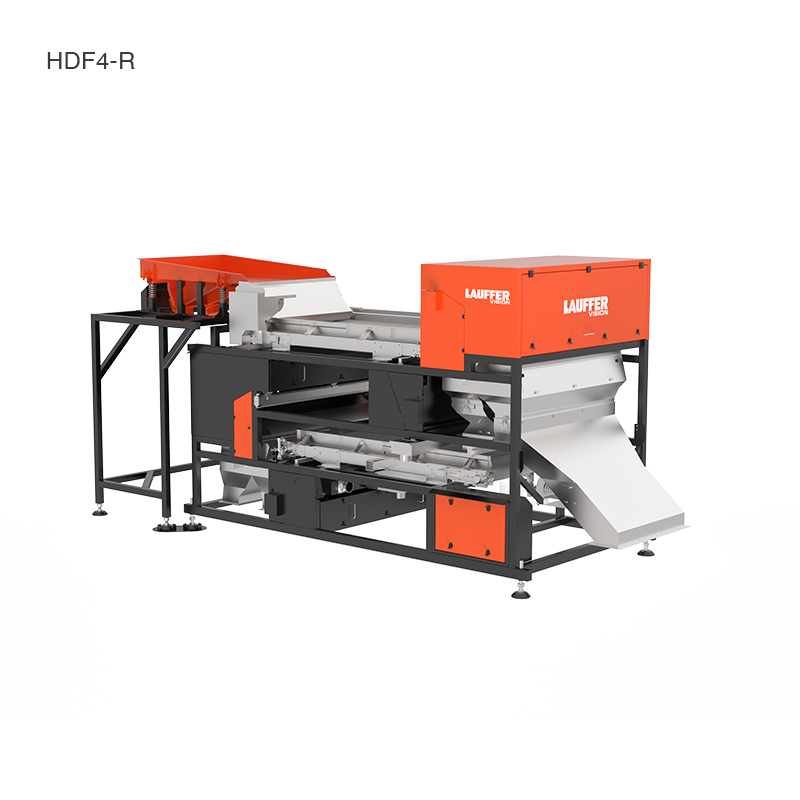
Available in two models with belt widths of 600 mm and 1200 mm, providing processors greater flexibility to match different throughput requirements.

Typical Applications
● Precise Plastic Sorting
✦ Separates ABS, PC, PP and other engineering plastics by color and surface feature variations (burnt/oxidized material) .
✦ Distinguishes matte black ABS from glossy black PC by detecting surface gloss variation and subtle color differences — a separation that is visually indistinguishable under standard lighting.
● Appliance Recycling
✦ Separates copper tubes (reddish-brown) from aluminum heat sinks (silver-white) in refrigerator and air conditioner shredder output.
✦ Separates copper windings (high reflectivity) from silicon steel sheets (low reflectivity) in washing machine motor shredder mixes.
✦ Recovers engineering plastics from small appliance housings (vacuum cleaners, power tools, printers) where mixed polymer streams require precise identification for downstream reprocessing.
● Battery Recycling
✦ Recovers high-value electrode materials from shredded lithium-ion battery cell fractions by distinguishing copper foils (reddish-purple) from aluminum foils (silver-white), enabling clean separation of anode and cathode current collectors for downstream hydrometallurgical processing.
Benefits
● Unmatched Sorting Precision
● Single-Pass Efficiency✦ High-resolution RGB imaging combined with AI-driven deep learning delivers consistently accurate separation of engineering plastics, copper and aluminum — even in heavily contaminated e-scrap streams where conventional sorting falls short.
● Maximum Material Recovery✦ Multiple high-value fractions are identified and separated in one pass — reducing equipment footprint, lowering energy consumption and streamlining workflows from shredder output to sale-ready material.
● Clean, High-Purity Output✦ Deep learning models trained on real-world production data ensure valuable fractions are captured with minimal loss — recovering more copper, aluminum and engineering plastics from every ton of incoming e-scrap.
● Scalable and Adaptable✦ Precisely separated material streams with low cross-contamination meet the stringent purity specifications demanded by downstream reprocessors, smelters and compounders — enabling recycled materials to command premium market prices.
● Lower Operating Costs✦ Deep learning models can be continuously retrained to accommodate new material types and evolving feed compositions — ensuring long-term effectiveness without hardware upgrades.
✦ By replacing manual sorting labor and reducing reliance on secondary sorting equipment, the system lowers per-ton processing costs while increasing throughput — delivering a compelling return on investment at any scale.
Specifications
Belt Width
(mm)
Air Nozzle
Air Pressure
(MPa)
Air Consumption
(m3/min)
Voltage
Power
(kW)
Dimension
(mm)
Unpacked Weight
(kg)
Legende HDF2-R
Specifications are approximate and subject to change without notice. Lauffer Vision reserves all rights for modifications.
Model
600
256
0.6~0.8
<2.1
220V~50/60Hz
6.6
4686×1924×2685
1589
Legende HDF4-R
1200
512
0.6~0.8
<4.1
220V~50/60Hz
8.3
5087×2524×2685
2165